Quick Facts
- Strategy: Strategic 401k inertia (the Newton Rule) leverages inaction as a deliberate investment tool.
- Success Rate: Research shows an 88% retention rate in target date funds over a 6-year market cycle.
- Participation Boost: Auto-enrollment features yield an 86% participation rate compared to only 37% for plans requiring active choice.
- Market Strength: Assets in target date funds have topped $5 Trillion, proving the dominance of automated asset allocation.
- Primary Risk Mitigation: Prevention of sequence of returns risk by maintaining equity exposure during market recovery phases.
401k inertia is the psychological and technical tendency for retirement accounts to remain in their current state, which often leads to higher wealth by leveraging compound growth and avoiding emotional trading. By staying the course through 401k automation benefits, investors benefit from professional-grade asset allocation without the risks of market timing.
The Newton Rule: Why Inaction is a Scientific Advantage
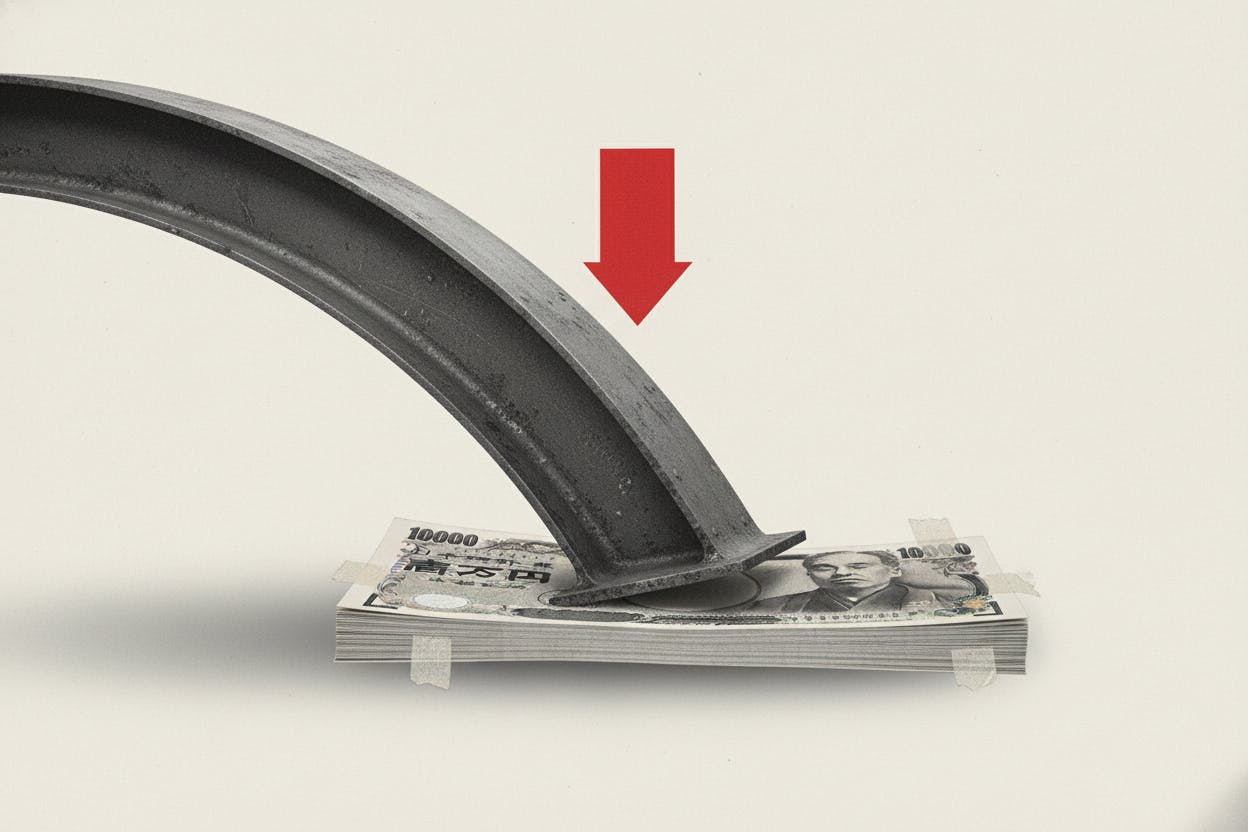
In the world of physics, Newton's First Law of Motion states that an object at rest stays at rest, and an object in motion stays in motion unless acted upon by an external force. In my years of analyzing portfolio strategies, I have found that this same principle applies beautifully to retirement savings. We call this the Newton Rule of personal finance.
Financial inertia is often viewed negatively, as a sign of laziness or a lack of financial literacy. However, for the average long term retirement investing strategy, 401k inertia is actually a scientific advantage. The external forces that typically disrupt a portfolio are emotions—specifically fear during market downturns and greed during bull markets. Keeping your investments at rest allows them to maintain their momentum through compound growth.
This concept taps into what behavioral finance experts call status quo bias. Humans naturally prefer things to stay the same. In a retail brokerage account, this might lead to holding a stagnant stock for too long. But within a retirement plan, status quo bias works in your favor. When your contributions are automated and your funds are selected for you by default, the benefits of 401k inertia for long term growth become apparent. You are essentially tricking your own investor psychology into doing the right thing.
Many investors, particularly those approaching retirement, suffer from a pessimism gap. They believe they are taking too much risk and feel the urge to move to "safe" cash when the news cycles turn negative. However, data frequently shows that those who do nothing end up with higher equity levels than they would have chosen for themselves if forced to make an active decision. This accidental bravery results in significant wealth accumulation over decades.

The Mechanics of Automation: TDFs and Glide Paths
The true engine of retirement success today is not the ability to pick the "next big thing," but rather the robust design of target date funds (TDFs). These funds are the primary vehicle through which 401k automation benefits are realized. Most modern 401k plans use a TDF as the default investment option, or what the Department of Labor calls a Qualified Default Investment Alternative (QDIA).
The primary target date fund advantages stem from the glide path. A glide path is the predetermined formula that shifts the fund’s asset allocation from aggressive (more stocks) to conservative (more bonds) as the investor nears their target retirement year. This happens automatically, without the investor needing to lift a finger.
There are two main types of glide paths:
- To Retirement: The allocation becomes most conservative exactly at the retirement date and stays there.
- Through Retirement: The allocation continues to shift and reduce equity exposure for 10 to 20 years after the retirement date.
The through retirement model is particularly effective for hands-off investors because it recognizes that retirement can last 30 years or more. By maintaining a higher equity portion through the early years of retirement, it helps combat the risk of outliving your money.
For those looking for how to set up 401k auto-increase for passive wealth building, many plans now offer an annual "step-up" feature. This is the ultimate expression of inertia. You decide once to increase your contribution rate by 1% every year, and the system handles the rest. This ensures that as your salary grows, your savings rate scales proportionally without the friction of manual portfolio rebalancing.
Why Inactive Investors Win: Data from the 95% Club
The most compelling argument for 401k inertia comes from the hard data of participant behavior. According to the Vanguard 2025 How America Saves report, a staggering 95% of non-advised participants made zero trades within their accounts in 2024. This isn't because they were all professional investors; it’s because inertia has become the prevailing strategy.
This "95% Club" represents the quiet winners of the market. While the headlines focus on day traders and meme stocks, the vast majority of Americans are quietly building wealth by doing absolutely nothing. The report highlights that retail market timing almost always subtracts from total returns. When investors trade, they often buy high after a rally and sell low after a dip, driven by loss aversion.
Consider the following comparison of outcomes for a typical investor:
| Feature | Active Trading (Market Timing) | Strategic Inertia (Automated) |
|---|---|---|
| Asset Allocation | Driven by headlines and fear | Driven by a professional glide path |
| Rebalancing Frequency | Sporadic and often emotional | Systematic and quarterly/annual |
| Tax Impact | High turnover (less relevant in 401k) | Optimized for long term hold |
| Performance Gap | Usually lags the market by 1.5-2% | Captures full market returns |
| Emotional Stress | High during market volatility | Minimal; "set it and forget it" |
The data also points to a high success rate for those in TDFs. Over a six-year observation period by the Employee Benefit Research Institute, it was found that 88% of participants who were defaulted into a target date fund stayed there. This persistence is why sequence of returns risk makes 401k inertia safer for pre-retirees. When you don't panic sell during a market dip just before retirement, you allow your portfolio to recover, protecting your future income from a permanent loss of capital. This passive 401k management vs active trading for retirement success debate is increasingly being settled in favor of inaction.
Stopping the Cycle of Emotional Trading Mistakes
Successful investing is as much about managing your own brain as it is about managing your money. The biggest threat to your 401k isn't a market crash—it’s how you react to that crash. This is where the beauty of inertia shines. It serves as a structural barrier against emotional trading.
When the market experiences volatility, an active investor feels an intense pressure to "do something." This is often a result of loss aversion, the psychological phenomenon where the pain of a loss is twice as powerful as the joy of a gain. We are wired to escape pain, which in a financial context means selling stocks when they are down.
However, avoiding emotional 401k trading mistakes through inaction allows the investor to bypass this biological trap. If you don't check your balance every day and you don't have an easy way to move everything to a "money market" fund with one click, you are forced to ride out the storm. Historically, the market's best days often follow its worst days. Missing just the ten best days in a decade can cut your total returns in half.
By relying on 401k inertia, you ensure that your risk tolerance is managed by a computer algorithm rather than your current mood. This is vital for surviving the "fear zone"—the five years before and after your retirement date. During this time, the stakes are highest, and the impulse to panic is strongest. Staying the course through the mechanics of the plan keeps your expense ratios low and your focus on the horizon, not the waves. There are many reasons to avoid panic selling your 401k during market dips, but the strongest one is simply that inaction has a better historical track record than reactivity.
FAQ
What is 401k inertia?
401k inertia is the tendency for retirement plan participants to stick with their current investment choices and contribution rates for long periods without making changes. While inertia is often seen as a negative trait in other areas of life, in retirement saving, it helps investors avoid the pitfalls of emotional trading and market timing.
How does 401k inertia affect retirement savings?
Inertia generally has a positive effect on retirement savings because it keeps investors committed to their long term retirement investing strategy. By not reacting to short-term market fluctuations, savers allow their portfolios to benefit from full compound growth and systematic rebalancing through default options like target date funds.
Is inertia always a bad thing for retirement accounts?
Inertia is not always bad; in fact, it is often a strategic advantage. It becomes a "bad" thing only if an investor is defaulted into a fund that doesn't match their goals (like a stable value fund for a 20-year-old) or if they never increase their contribution rate as their income grows. However, most modern plans use auto-increase features to turn inertia into a wealth-building tool.
What role do default settings play in 401k inertia?
Default settings are the primary drivers of 401k inertia. When an employer automatically enrolls a new hire at a specific contribution rate and places their money in a target date fund, most employees will stay in that setup indefinitely. These defaults leverage the path of least resistance to ensure high participation and professional asset allocation.
Can target-date funds help mitigate the effects of inertia?
Yes, target date funds are designed specifically to harness inertia. They provide a professionally managed, diversified portfolio that automatically adjusts its risk level as the investor gets older. This means even if the investor does nothing for 30 years, their portfolio will still be rebalanced and transitioned toward more conservative assets on an appropriate schedule.
Conclusion: Making Inertia Work for You
In the fast-paced world of finance, we are often told that "active" is better than "passive" and that "doing something" is better than "doing nothing." But the evidence in the retirement space suggests otherwise. Choosing a strategic 401k inertia approach is not about being lazy; it is about being disciplined enough to let the system work.
By embracing the Newton Rule, you remove your own emotional fallibility from the equation. You allow 401k automation benefits to handle the heavy lifting of portfolio management and glide path adjustments. As we have seen from the data of the 95% Club, those who resist the urge to trade are the ones who ultimately capture the greatest share of market gains.
Review your settings today—ensure your contribution rate is set to auto-increase and verify that your funds are aligned with your retirement date. Once that is done, the best thing you can do for your future self is to simply step back and do nothing. Let the inertia carry you toward your goals.