Quick Facts
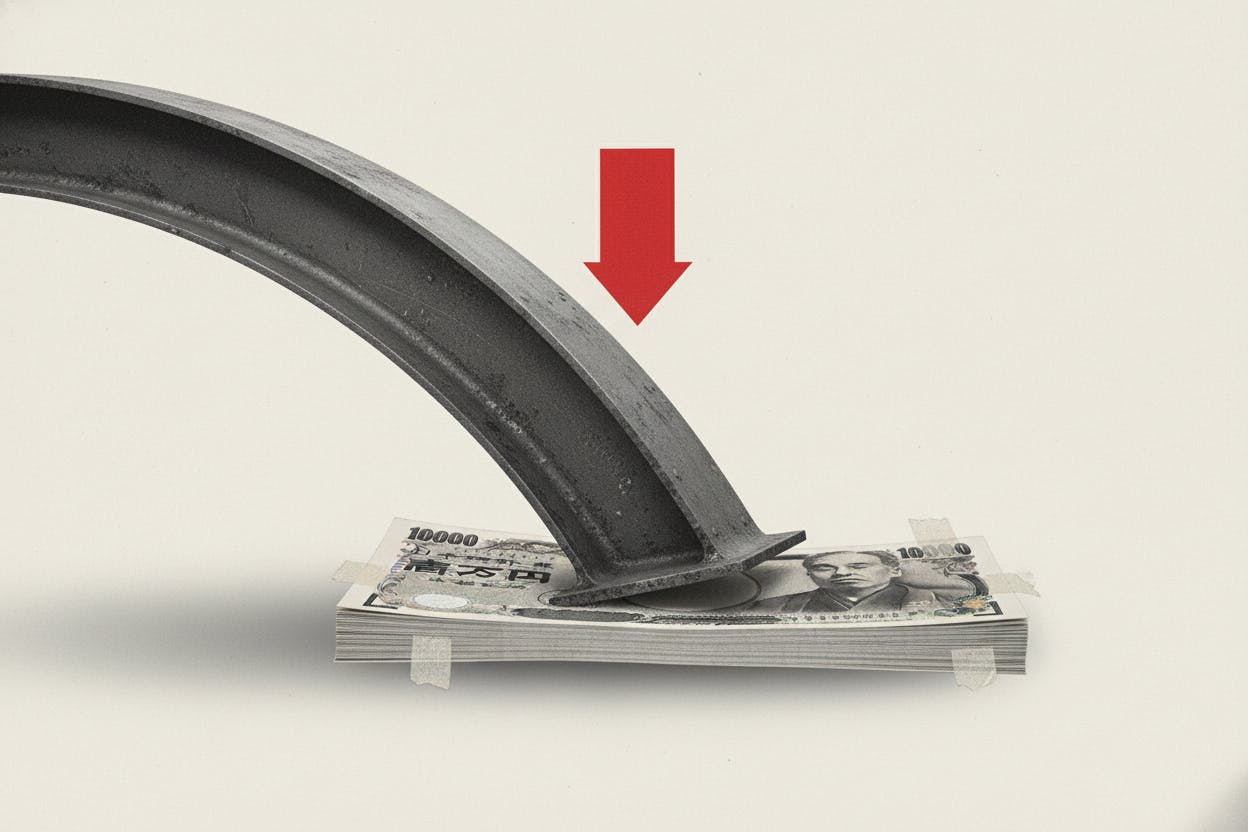
- Hedging Budget: Typically 1% to 3% of the total portfolio value to ensure protection without eroding long-term gains.
- Core Risks: Systemic market volatility and fiat devaluation caused by central bank policy shifts.
- Currency Impact: North American firms saw a $8.38 billion impact from foreign exchange fluctuations in early 2024, a 219% increase from the previous quarter.
- Safe Haven Highlights: Gold surged 65% in 2025, solidifying its role as a premier non-correlated asset.
- Digital Hedging: Stablecoins pegged to major fiat currencies offer a low-cost alternative for rapid currency risk management for investors.
- Institutional Benchmarks: Hedged global indices outperformed unhedged counterparts by an annualized 2.42% over a decade-long study.
Portfolio hedging strategies protect long-term holdings from systemic risk and currency fluctuations through tactical adjustments. Effective techniques include diversifying into non-correlated assets like government bonds and commodities, or using forex derivatives like futures to hedge against exchange rate volatility. In 2026's market, a robust hedge typically costs between 1% and 3% of the total portfolio value.
Auditing Exposure: Systemic vs. Currency Risk in 2026
Before deploying capital into protective instruments, a disciplined investor must perform a rigorous portfolio risk audit. As we navigate the complex macro environment of 2026, the primary threat is no longer just a standard market correction. Instead, we are seeing a convergence of systemic risk—where the entire financial system experiences a shock—and profound currency exposure. The dominance of a few mega-cap technology stocks has created a hidden vulnerability; with nearly 35% of the S&P 500 concentrated in its top 10 holdings, many investors believe they are diversified when they are actually doubling down on a single sector.
To effectively manage this, you must distinguish between two types of loss. First, there is the decline in the market price of your stocks. Second, there is the erosion of purchasing power due to fiat devaluation. When you conduct a portfolio risk audit for currency exposure, look at the geographic revenue sources of your holdings. A domestic company that earns 60% of its revenue overseas is essentially a proxy for international markets. If the domestic currency strengthens, those overseas earnings shrink when converted back, creating a drag on your portfolio hedging strategies.
The general rule for 2026 is the 1-3% insurance principle. Much like you pay a premium to insure your home, you should be willing to sacrifice a small portion of your annual return to provide downside protection. If your hedging costs exceed 300 basis points, you are no longer protecting a portfolio; you are betting against your own long-term wealth creation. Capital preservation is the goal, not profiting from every minor dip in the road.
Strategic Diversification: Transitioning Beyond Equities
The most foundational of all portfolio hedging strategies is asset class diversification for volatility. While most investors are familiar with the "60/40" stock-bond split, the volatility landscape of 2026 requires more sophisticated non-correlated assets. Historical data shows that during periods of high equity stress, traditional correlations break down. For instance, between 2001 and 2007, non-U.S. stocks delivered a 12.1% return compared to the Russell 3000 at 6.2%, proving that stepping outside one's home market is a viable currency hedge by default.
When searching for the best non-correlated assets for portfolio diversification 2026, look toward commodities, real estate investment trusts (REITs), and treasury inflation-protected securities (TIPS). These assets typically do not move in lockstep with the NASDAQ or S&P 500. Gold remains a pivotal safe-haven asset, especially after its monumental rise in 2025. By maintaining a 5% to 10% allocation to gold or silver, you create a natural buffer against fiat devaluation.
Another critical component of your diversification plan should involve safe-haven currencies. The Japanese Yen (JPY) and the Swiss Franc (CHF) often appreciate during times of global panic. By holding a portion of your cash reserves or short-term fixed income in these currencies, you integrate currency risk management for investors directly into your asset allocation. This approach improves your risk-adjusted returns by lowering the overall volatility index of your holdings, allowing you to stay invested during the inevitable market storms.
| Asset Type | Vulnerability Level | 2026 Resilience Strategy | Expected Cost |
|---|---|---|---|
| Large-Cap Tech | High (Concentration Risk) | Layer in put options or inverse ETFs | 1.5% - 2.5% |
| International Stocks | Medium (Exchange Risk) | Use forex derivatives for local currency pairing | 0.5% - 0.8% |
| Emerging Markets | High (Political/Fiat Risk) | Diversify into stablecoins or Gold-backed tokens | 0.2% - 0.5% |
| Domestic Bonds | Low (Interest Rate Risk) | Maintain laddered durations; monitor SOFR | 0.1% - 0.3% |
Tactical Protection: Forex Derivatives and Stablecoins
For the active investor, diversification may not be enough when dealing with sudden exchange rate shifts. This is where tactical international stock portfolio currency risk management techniques come into play. Many sophisticated investors are now comparing forex derivatives vs international diversification for hedging to see which offers the better "bang for the buck." Derivatives, such as futures and swaps, allow you to lock in exchange rates for a future date, effectively neutralizing the impact of a falling home currency.
Using forex derivatives to hedge international stock holdings generally costs between 50 and 60 basis points. While this is an additional expense, it is far cheaper than suffering a 10% loss because of a currency swing. For example, if you own a large position in European manufacturing stocks, you can use a currency swap to offset the potential decline of the Euro against your domestic currency. This ensures that the performance of the company is the primary driver of your return, not the volatility of the global FX market.
In the digital era, we also have new tools like stablecoins. Using stablecoins as a currency hedge for stock portfolios has become increasingly popular in 2026. These digital assets are pegged 1:1 to assets like the U.S. Dollar or the Euro, but they live on a blockchain. This allows for near-instant movement of capital. If you anticipate a period of high market volatility 2026, shifting equity dividends into fiat-pegged stablecoins can preserve purchasing power without the slow settlement times of traditional banking systems. This is particularly useful for drawdown mitigation when you need to exit a position quickly and park cash in a stable environment.
Institutional Proof: Lessons from Q1 2026 Corporate Performance
Institutional behavior often provides the best blueprint for retail investors. In the first quarter of 2026, we saw a significant shift in how regional banks, such as M&T Bank and Texas Capital, handled their market exposure. As interest rates stabilized, these institutions moved away from simple rate-rise protection and toward hedging a stock portfolio during high market volatility 2026. They utilized SOFR (Secured Overnight Financing Rate) swaps to manage the cost of their liabilities while keeping their equity portfolios shielded from late-cycle volatility.
The scale of currency risk is also evident in the corporate world. According to reports, North American and European multinational corporations faced a staggering $95 billion negative currency impact throughout 2023. This massive figure highlights why currency risk management for investors is not just a luxury—it is a necessity. If billion-dollar corporations are losing significant percentages of their earnings to exchange rates, your individual portfolio is even more vulnerable.
A case study in current market resilience can be found in the implementation of "collars" on high-growth portfolios. By purchasing put options (to set a floor on losses) and simultaneously selling call options (to finance the purchase), an investor can create a "zero-cost" hedge. While this caps the maximum upside, it provides absolute capital preservation during systemic risk events. This institutional-grade strategy is one of the most effective portfolio hedging strategies for those who prioritize long-term stability over aggressive, unhedged growth.
FAQ
What are the most common portfolio hedging strategies?
The most common methods include asset class diversification, using protective put options, and shorting market indices via inverse ETFs. Many investors also utilize safe-haven assets like gold and government bonds to reduce correlation with the stock market. Currency-specific strategies include using forex derivatives like futures or spot trades to offset exchange rate movements.
How do you hedge a portfolio against a market crash?
To protect against a crash, you typically look for instruments that increase in value when the market falls. This can include buying put options on the S&P 500, holding volatility index (VIX) products, or allocating to non-correlated assets like cash and high-grade treasuries. The goal is to create a capital cushion that limits your maximum drawdown during a rapid sell-off.
What are the cheapest ways to hedge a stock portfolio?
The most cost-effective way to hedge is through strategic diversification, which costs nothing but the time to research. Beyond that, selling covered calls to offset the cost of buying put options (a collar) is a low-cost tactical approach. In the digital space, holding fiat-pegged stablecoins offers a high-liquidity, low-fee way to preserve dollar value during periods of market stress.
Is portfolio hedging worth the cost for long-term investors?
Yes, provided the cost remains within the 1% to 3% range of the total portfolio value. Hedging is essentially insurance; while it may drag on returns during a bull market, it prevents the devastating losses that can take years to recover from. For long-term capital preservation, maintaining a hedge ensures that you stay in the game and avoid emotional selling during downturns.
What is the difference between diversification and hedging?
Diversification is a passive strategy that spreads risk across different assets to reduce the impact of any single failure. Hedging is an active, tactical strategy that uses specific financial instruments to offset potential losses in a specific position. Diversification helps with "average" volatility, whereas hedging is designed to provide direct protection against specific systemic or currency threats.
Final Summary
Protecting your stocks in 2026 requires a shift from a "set it and forget it" mentality to a proactive risk management framework. By combining asset class diversification for volatility with tactical tools like forex derivatives and stablecoins, you ensure your portfolio can withstand both market crashes and the slow erosion of currency value.
The first step is always the audit: understand where your money is actually exposed. If you discover that your portfolio is heavily weighted toward domestic tech or lacks a currency buffer, the time to act is now. Consult with a financial advisor to determine which hedging instruments align with your specific risk tolerance, and always keep an eye on the 300 basis point cost rule. Capital preservation isn't about avoiding risk entirely—it's about managing it so that you are always positioned for the next market recovery.