Quick Facts
- Strategic Split: The spinoff divides the logistics giant into two publicly traded companies: FEC (FedEx Express and Ground) and FDXF (FedEx Freight), effective June 1, 2026.
- Margin Targets: UBS analysts project distinct operating ratios for the new entities, with FEC targeting 92.1% and FDXF aiming for 87.2% by fiscal year 2027.
- Valuation Method: Investors are encouraged to transition toward a sum-of-the-parts (SOTP) framework, which assigns higher multiples to the high-growth freight unit.
- Integration Goals: Efficiency gains for the parcel business rely on the successful execution of Network 2.0, merging independent Express and Ground delivery operations.
- Cost Savings: The restructuring is supported by the DRIVE initiative, which seeks to realize $6 billion in structural cost reductions by 2027.
- Capital Return: FDXF is expected to pay a $4.1 billion dividend to the parent company prior to the completion of the spinoff, strengthening the balance sheet of the remaining parcel unit.
The upcoming FedEx spinoff marks a structural reorganization that splits the logistics giant into two distinct margin stories. UBS analysts believe the separation will enhance price discovery by allowing investors to evaluate FedEx spinoff margins independently for Parcel and Freight units. By 2027, the remaining FedEx (FEC) and the standalone FedEx Freight (FDXF) are projected to hit aggressive operating ratio targets of 92.1% and 87.2%, respectively, signaling a new era of capital markets efficiency.
Unlocking Value: The Sum-of-the-Parts (SOTP) Narrative
The decision to separate the freight business from the primary parcel operations is a classic case of strategic divestment aimed at correcting a persistent valuation gap. For years, the market has viewed the company through a blended lens, effectively discounting the highly profitable less-than-truckload logistics segment. By moving toward a sum-of-the-parts valuation, the investment community can finally achieve accurate price discovery for each segment’s unique cash flow profile.
Currently, the blended corporate structure forces the market to apply a single multiple across vastly different business models. UBS notes that the parcel-centric business, FEC, trades at an estimated 7.4x EV/EBITDA multiple. In contrast, the high-performing freight unit, FDXF, commands a theoretical multiple of 19.6x EV/EBITDA when benchmarked against its industry peers. This discrepancy highlights how the current conglomerate structure suppresses the total market capitalization. By applying sum-of-the-parts valuation to FedEx spinoff stocks, portfolio managers can more precisely adjust their exposure to the cyclicality of the freight market versus the secular growth of e-commerce delivery.
The separation shifts the narrative from a unified logistics provider to two specialized vehicles. This allows for a relative valuation approach where FDXF is judged against high-performing carriers like Old Dominion, while the parcel unit is measured against UPS and DHL. Interpreting FedEx price discovery post-spinoff becomes a matter of assessing the pricing power of two specialized leaders rather than trying to balance the capital intensiveness of a global air fleet with the asset-light potential of a regional trucking network.
FEC: Integrating Express and Ground for Efficiency
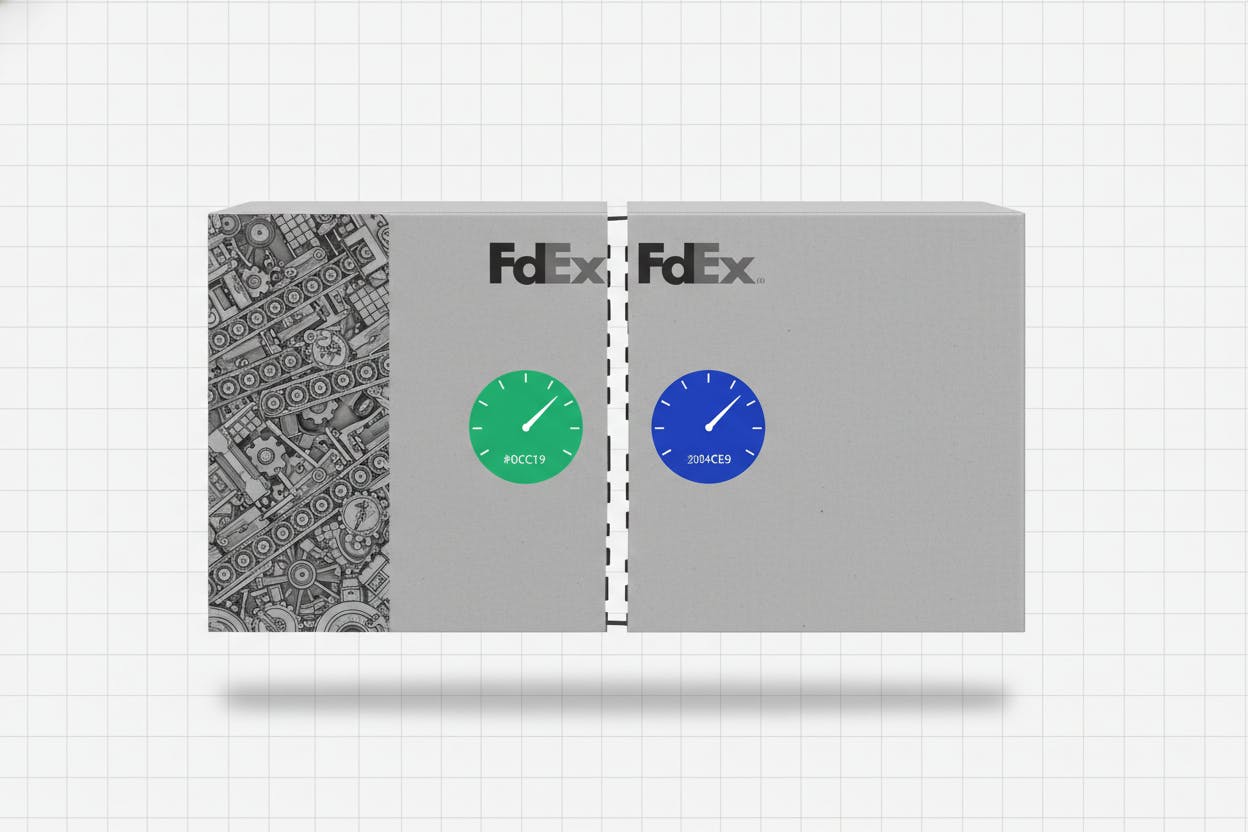
The cornerstone of the post-spinoff parcel business (FEC) is the fundamental shift toward a unified operational model. Historically, FedEx Express and Ground were managed as separate silos, often leading to redundant routes and underutilized hub capacity. The structural reorganization under the Network 2.0 initiative aims to eliminate these inefficiencies by merging the air and surface delivery networks into a single, cohesive system. This transition is essential for improving the FedEx operating ratio targets within the parcel segment.
UBS highlights that the path to a 92.1% operating ratio for FEC relies on significant asset utilization improvements. By 2027, the company expects to have finalized the Express/Ground integration in most major North American markets. This move is not just about cutting costs; it is about reclaiming pricing power in a market increasingly dominated by Amazon. To counter this competitive pressure, FedEx is leaning into its Intelligence as a Service (fDX) platform. This digital-first approach provides end-to-end supply chain visibility, allowing the parcel business to transition from a pure transport provider to a strategic technology partner for merchants.
The success of FEC is tied to its ability to handle multi-modal transport with a leaner footprint. Analyzing UBS 2027 operating ratio targets for FedEx reveals a belief that the company can finally narrow the profitability gap with its key rivals. The combined model allows for a flexible response to volume fluctuations, ensuring that the legacy of Express speed is maintained while Ground economics are applied to the final mile.
FDXF: Maximizing Standalone Freight Profitability
While the parcel side focuses on integration, the standalone FedEx Freight (FDXF) is eyeing market dominance in the LTL sector. As a standalone entity, FDXF will no longer be competing for internal capital against the expensive upkeep of a global aviation fleet. This autonomy is a core strategic driver for FedEx Freight standalone profitability. Free from the constraints of the parent company, management can reinvest more aggressively in its own fleet modernization and regional hub technology.
UBS projects that FDXF will achieve an operating ratio of 87.2% in fiscal 2027, a significant improvement from the already strong 88.7% estimated for fiscal 2026. This puts the company in direct competition with top-tier LTL providers. The following comparison illustrates how the spinoff positions FDXF relative to its most efficient peers:
| Carrier | Target/Current Operating Ratio | Valuation Multiple (EV/EBITDA) |
|---|---|---|
| FedEx Freight (2027 Target) | 87.2% | 19.6x (Est.) |
| Old Dominion | 70% - 75% | 20.0x+ |
| Saia Inc. | 82% - 84% | 18.0x |
| XPO Logistics | 85% - 87% | 15.0x |
Benchmarking FedEx Freight against LTL peer averages shows that there is still room for improvement, but the standalone structure provides a clearer roadmap. The impact of separate leadership on FedEx spinoff performance cannot be overstated; a dedicated executive team focused solely on freight dynamics—such as tonnage optimization and yield management—is better equipped to navigate the cyclicality of the less-than-truckload logistics sector. This focus is expected to result in a 7.7% revenue growth forecast and a 12% operating margin benchmark by 2026.
The DRIVE Engine: Mechanics of Margin Improvement
The catalyst for these ambitious targets is the DRIVE program, a comprehensive cost-reduction initiative designed to reshape the company’s bottom line. The goal is to strip out $6 billion in annual costs from the system by fiscal 2027. This is not a temporary belt-tightening measure but a fundamental rethink of supply chain efficiency and asset utilization.
A significant portion of these savings comes from the network consolidation. Management has already identified 475 facilities slated for closure or repurposing as part of the move toward the single-unit model. By optimizing the "middle mile"—the segment where freight is moved between hubs—FedEx can reduce its reliance on third-party linehaul providers and improve operational synergy.
The DRIVE program is broken down into two phases:
- Fiscal 2025 Targets: Achieving $4 billion in permanent cost reductions through procurement efficiencies and labor optimization.
- Network 2.0 Impact: Delivering an additional $2 billion in annual savings by fiscal 2027 through the full integration of the North American network.
These structural improvements fund the margin expansion for both entities. For FDXF, it means higher margins on every pallet moved. For FEC, it provides the necessary capital to compete in the high-frequency retail parcel space without sacrificing long-term profitability.
Spinoff Timeline and Mechanics
For investors, the mechanical side of the transaction is just as important as the strategic outlook. The spinoff of FedEx Freight is scheduled to be completed by June 1, 2026, marking the official birth of the two independent companies. The structure of the deal involves a "when-issued" trading period starting around May 27, 2026, allowing the market to begin pricing the two entities before the final distribution.
A critical component of this transition is the capital allocation plan. Prior to the spinoff, the freight unit is mandated to pay a $4.1 billion dividend back to the parent. This capital injection is designed to deleverage the parcel business, ensuring that FEC starts its standalone life with a solid credit profile. The distribution itself is expected to follow a 1-for-2 share ratio, meaning for every two shares of the parent held, investors will receive one share of the new FDXF.
This transition period will likely see a shift in investment sentiment. Initial volatility may occur as institutional funds rebalance their portfolios to fit their specific mandates—some preferring the steady, utility-like e-commerce growth of the parcel unit, and others seeking the high-margin, cyclical upside of the standalone freight business.
FAQ
How would a spinoff affect FedEx's operating margins?
The spinoff serves as a catalyst for margin expansion by allowing each unit to focus on specialized cost-reduction strategies. The parcel business targets a 92.1% operating ratio by integrating its networks, while the freight business aims for 87.2% by optimizing its asset-intensive LTL operations. Relieved of the complexity of managing divergent business models, each entity can more effectively implement the DRIVE program's efficiency gains.
What are the expected profit margins for the FedEx freight spinoff?
The newly formed standalone freight entity, FDXF, is projected to achieve an operating ratio of 87.2% by fiscal 2027. This correlates to an operating margin of approximately 12.8%. UBS expects these margins to be driven by improved yield management, a recovery in the freight cycle, and increased asset utilization within its terminal network.
Why is FedEx considering spinning off its less-than-truckload unit?
The primary motivation is to unlock shareholder value through price discovery. The market currently undervalues the freight unit due to its entanglement with the lower-multiple parcel business. Separating the less-than-truckload logistics segment allows investors to value the business at a higher multiple comparable to pure-play LTL carriers, while providing the unit with the autonomy to manage its own capital expenditures.
How do FedEx Freight margins compare to competitors like Saia and Old Dominion?
FedEx Freight currently operates with healthy margins but trails the industry gold standard. Old Dominion maintains a superior operating ratio in the low 70s, while Saia and XPO typically hover in the low-to-mid 80s. The 2027 target of 87.2% for FDXF is a significant step toward closing the performance gap with these top-tier transportation peers.
Can a standalone company achieve higher margins than a combined FedEx entity?
Yes, because standalone companies benefit from focused management and dedicated capital. In a combined entity, resources are often diverted to the largest but least profitable segments. As an independent company, FDXF can prioritize investments in LTL-specific technology and regional sales staff, which directly impact terminal efficiency and pricing power, ultimately leading to higher margins than as a subsidiary.
CTA
As we approach the 2026 milestone, the investment sentiment surrounding this restructuring remains cautiously optimistic. UBS revised its price target for the stock to $445, signaling that the market is beginning to price in the potential of these two distinct margin stories. For the long-term investor, the FedEx spinoff margins story is less about the separation of assets and more about the unification of strategy—a move that finally aligns the company’s structural design with its operational potential.