Quick Facts
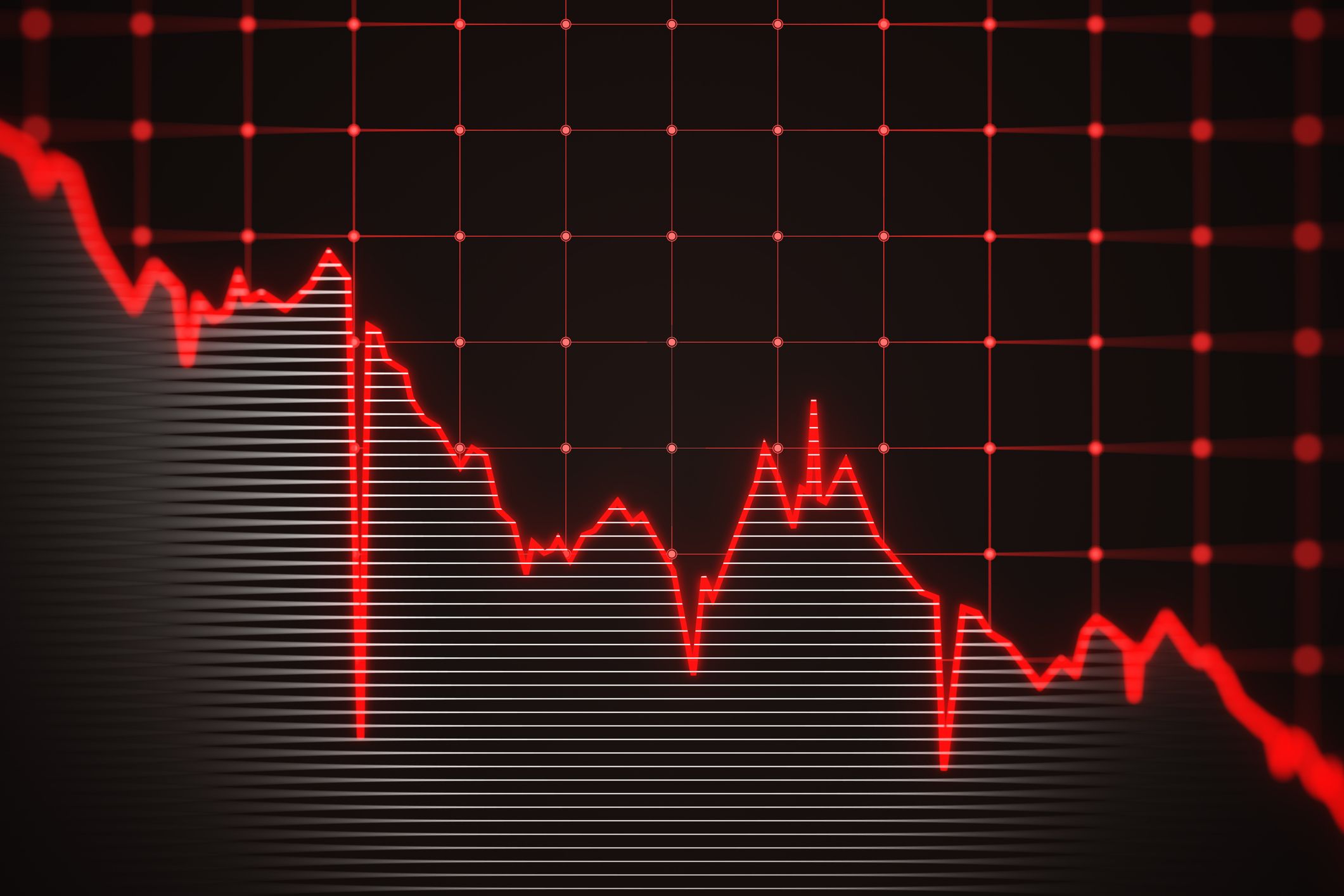
- Market Movement: The Dow Jones Industrial Average dropped 739 points (1.56%) to a closing price of 46,677.
- Energy Impact: Crude oil futures spiked 9.7% to reach $95.73 per barrel following supply disruptions.
- Geopolitical Trigger: The closure of the Strait of Hormuz has frozen approximately 20% of global petroleum transit.
- Inflation Shift: Headline CPI projections rose to 0.9%, creating a divergence from stable core inflation readings.
- Rate Expectation: Futures markets moved the anticipated first 2026 rate reduction from June to October.
- Laggards: Financial and retail sectors led the decline, with Goldman Sachs falling 4.4%.
- Support Levels: Analysts are monitoring 46,000 and 45,000 as critical technical floors for the blue-chip index.
The stock market today faced a massive sell-off as the Dow Jones Industrial Average plummeted 739 points. Triggered by a geopolitical shock in the Strait of Hormuz, investors are recalibrating the Dow Jones outlook and the 2026 Fed rate cut forecast.
The Strait of Hormuz Shock: Oil Price Impact on Stocks
The primary catalyst for the volatility observed in the stock market today was the sudden and unexpected closure of the Strait of Hormuz. For seasoned investors, this maritime geography is more than just a shipping lane; it is the world's most sensitive energy artery, responsible for the transit of roughly one-fifth of global oil supply. When news broke of the closure, crude oil futures responded with a 9.7% surge, briefly touching $95.73 per barrel.
This spike has immediate and systemic implications for equity risk premiums across all sectors. The suddenness of the event has triggered concerns over energy-driven inflation, a phenomenon that can quickly erode corporate profit margins and personal disposable income. Unlike previous cycles where energy shocks were met with a release from the Strategic Petroleum Reserve, the current geopolitical climate suggests that supply may remain constrained for an extended period. This uncertainty is what drove the Dow Jones Industrial Average to its lowest closing level of the year at 46,677.
For a diversified portfolio, the oil price impact on stocks is rarely uniform. While energy producers often see a short-term boost in valuations, the broader market views $95 oil as a tax on growth. Middle East geopolitical risk historically introduces a high-volatility regime that forces institutional managers to transition from growth-oriented strategies to defensive postures. The concern now is whether this surge represents a temporary spike or a structural shift that will fundamentally alter the headline consumer price index for the remainder of 2026.
Fed Rate Cut Forecast: A Higher-for-Longer Shift
Perhaps the most significant long-term consequence of the current market downturn is the dramatic shift in the Fed rate cut forecast. Prior to the energy spike, the consensus among futures traders pointed toward a policy easing cycle beginning in June 2026. However, data from the CME FedWatch tool now reveals a significant pivot, with the market pricing in a delay until October.
This recalibration is driven by the reality that rising energy costs complicate the disinflation trend that the Federal Reserve has worked so hard to establish. While core inflation—which excludes volatile food and energy costs—has remained relatively stable at 0.2%, the headline numbers are being pulled upward. Central bankers are now faced with a "stealth rate hike" scenario, where higher energy prices act as a tightening mechanism on the economy equivalent to an 80-basis-point increase in the federal funds rate.
Investors must navigate this period by distinguishing between noise and signal. The Federal Reserve often signals a desire to look through the volatility of energy prices if the underlying core inflation remains contained. However, persistent supply chain disruptions in the Middle East could force the bank to maintain higher interest rates for a longer period to ensure that secondary inflationary expectations do not become unanchored. Consequently, yield curve steepening has become a central theme for fixed-income participants, as long-term rates adjust to the reality of sustained price pressures.
Winners and Losers: From Blue-Chip Laggards to Small-Cap Resilience
The 739-point drop on March 12, 2026, was not felt equally across all components of the Dow. We observed significant pressure on blue-chip laggards, particularly those sensitive to interest rates and consumer health. Goldman Sachs (GS) saw a decline of 4.4%, reflecting fears that a prolonged high-rate environment could dampen investment banking activity and increase credit risks. Similarly, Dollar General struggled as investors weighed the impact of rising oil prices on consumer stocks, specifically how higher gas prices at the pump drain the wallets of low-to-middle-income shoppers.
| Company/Sector | Ticker | Performance | Primary Driver |
|---|---|---|---|
| Goldman Sachs | GS | -4.4% | Capital markets uncertainty |
| Dollar General | DG | -3.1% | Consumer spending pressure |
| Petco | WOOF | +1.2% | Small-cap resilience/Defensive demand |
| Chevron | CVX | +2.8% | Crude oil price appreciation |
Interestingly, we saw signs of finding value in small cap stocks after market drop. While the large-cap indices were weighed down by their multi-national complexities, certain domestic-focused small-cap firms showed resilience. Petco, for instance, managed to trade in the green, suggesting that investors are seeking refuge in "lifestyle-essential" sectors that are less impacted by global geopolitical tensions. This bifurcation in performance highlights the importance of active management when navigating a market sentiment shift.
What Comes Next: Technical Support and 2026 Price Targets
Despite the significant drawdown, the long-term Dow Jones outlook remains a topic of intense debate among institutional analysts. While the immediate reaction to a 739-point plunge is often fear-driven, the underlying fundamentals of many Dow components remain robust, particularly those leading the AI supercycle.
Institutional 2026 Price Targets
| Firm | Projected Dow Target | Outlook Sentiment |
|---|---|---|
| Citigroup | 53,000 | Cautiously Optimistic |
| Bank of America | 54,000 | Bullish on Tech/Energy |
| Institutional Consensus | 51,500 | Neutral |
From a technical perspective, the index is currently testing a rising wedge pattern. Successful navigation of this volatility depends on the Dow's ability to hold the 46,000 level. If this support holds, the current pullback may offer entry points for long-term investors. However, if energy prices remain elevated, we could see the index test a secondary floor at 45,000.
When considering what to do when the dow plunges 700 points, the most effective strategy is often disciplined rebalancing rather than emotional exiting. Investors should look to how to hedge your portfolio against middle east risks by increasing exposure to energy and defense or by utilizing short-term treasury bills to capture the higher yields offered during a fed rate cut delay.
Technical Levels to Watch: Professional traders are closely watching the 46,000 support level. A sustained close below this mark could signal a shift toward a bearish regime, while a recovery above 48,000 would indicate that the market has successfully priced in the current geopolitical risk.
FAQ
Why is the stock market falling today?
The primary driver behind the decline is a sudden geopolitical escalation in the Middle East, specifically the closure of the Strait of Hormuz. This event has caused oil prices to surge nearly 10%, leading to fears of renewed inflation and a more hawkish stance from the Federal Reserve regarding interest rates.
Why are stocks dropping today?
Stocks are dropping due to a combination of rising energy costs and a repricing of interest rate expectations. When energy prices spike, it acts as a drag on consumer spending and increases operating costs for businesses, which negatively impacts earnings forecasts for major corporations within the Dow and S&P 500.
How are stock market futures looking today?
Stock market futures were heavily impacted by the news from the Strait of Hormuz, showing a sharp downward trend before the market open. Futures traders have moved away from a June rate cut expectation, instead pricing in a first reduction in late 2026, which has created a more cautious environment for equities.
What economic reports are affecting the market today?
Beyond the geopolitical news, investors are closely monitoring headline inflation data and the CME FedWatch tools. The divergence between stable core inflation and rising headline CPI—driven by energy—is the critical economic narrative that prompted the massive Dow sell-off.
Is today a good day to buy or sell stocks?
Investment decisions should be based on long-term portfolio goals rather than single-day movements. For long-term investors, significant pullbacks often provide an opportunity to purchase high-quality blue-chip stocks at a discount. However, those with short-term liquidity needs should be cautious given the current geopolitical uncertainty and the potential for a higher-for-longer interest rate environment.