Quick Facts
- Market Status: Transitioning from 2025’s aggressive growth phase into a healthy consolidation cycle.
- Valuation Metric: Investors are prioritizing P/NAV multiples, with many quality producers currently trading below 0.8x.
- Gold Forecast: Industry analysts project a base-case gold price of US$5,400 per ounce by the end of 2026.
- Sector Influence: The energy and materials sectors now represent 37% of the total index weighting, driving overall TSX performance.
- Key Strategy: Shift resource portfolio management toward low-cost producers capable of protecting margins against inflation.
- Top Ticker Focus: Professional interest remains high for B2Gold (BTO) and Agnico Eagle (AEM) due to operational stability.
The tsx mining stocks rally is not over; it has entered a technical breather phase. The massive 2025 gains have led to professional profit-taking cycles, but fundamental underlying safe-haven demand remains high as producers trade at a 30-50% discount to their Net Asset Value (NAV) despite record metal prices.
The 2026 Market Context: Profit-Taking vs. Price Reversal
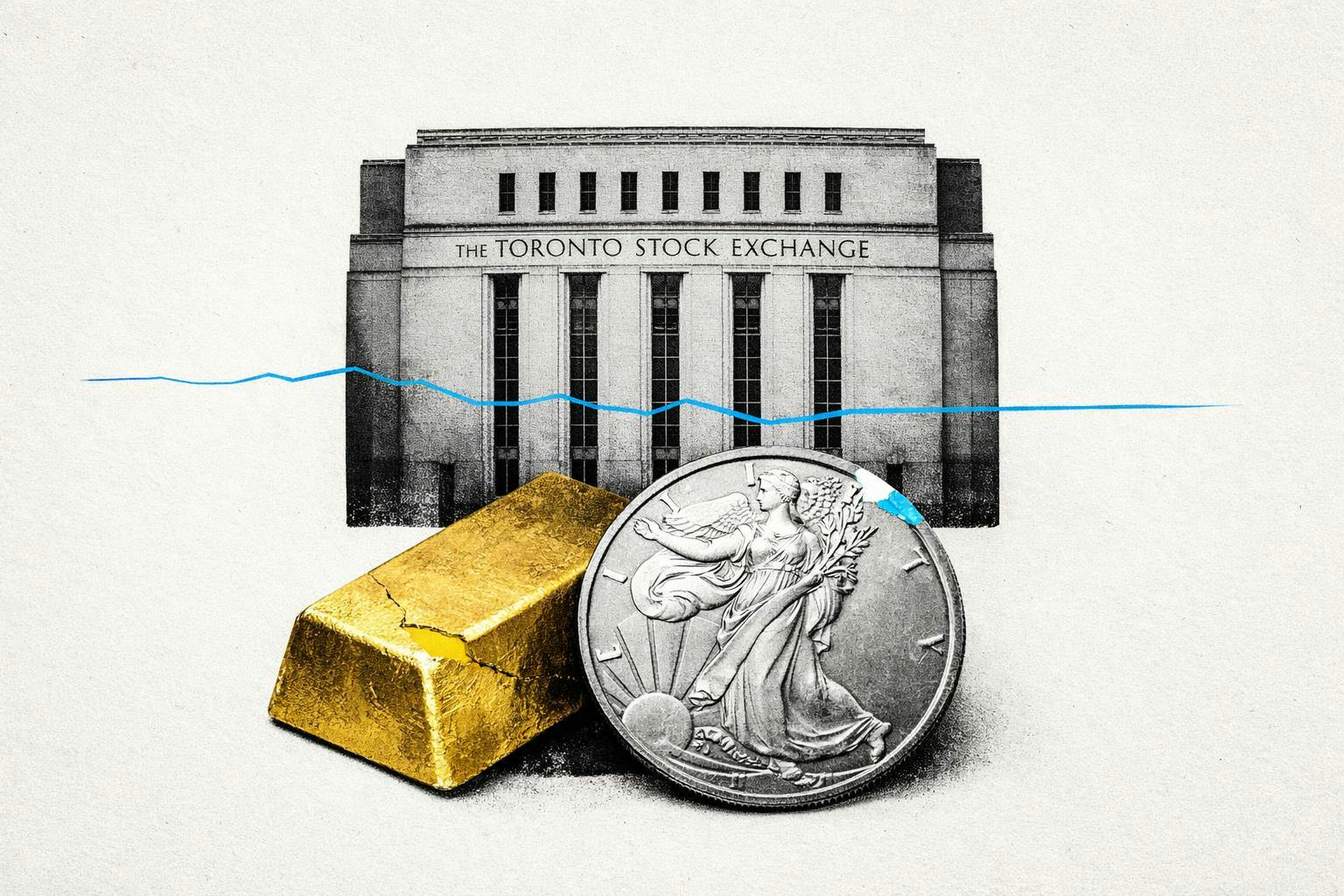
As we approach mid-year, the canada materials sector forecast for late 2026 remains optimistic, though it requires a more nuanced approach than the broad-based buying seen in previous months. As of May 2026, the S&P/TSX Materials sector recorded a 12-month gain of approximately 85%, a performance that naturally invites a period of cooling. This volatility should not be mistaken for a market top. Instead, it represents the high base effect—where the rapid appreciation of 2025 sets a high bar for year-over-year gains.
A critical component of this transition is the impact of us fed rates on tsx mining stocks 2026. While non-yielding assets like gold typically face headwinds when interest rates are high, the current environment is defined by the shift toward monetary policy shifts that favor long-term stability. As the U.S. Federal Reserve moves toward a neutral rate environment, the opportunity cost of holding metals diminishes. This provides a structural tailwind for Canadian producers who benefit from a relatively weaker Loonie against a strong US dollar, effectively lowering their domestic operating costs while selling products in global currencies.
Professional investors are viewing the current consolidation as a necessary foundation for the next leg of the cycle. Unlike the speculative bubbles of the past, contemporary growth is underpinned by annual industry earnings that are forecasted to grow by an average of 17%. The focus has shifted from "discovery at any cost" to "sustainable margin protection," making this a stock-picker’s market rather than a rising tide for all boats.
How to Value TSX Mining Stocks in 2026: The NAV Disconnect
Valuation in the resource sector requires moving beyond simple P/E ratios, which often fail to account for the finite life of a mine. In 2026, the primary metric for sophisticated investors is the Price to Net Asset Value (P/NAV) multiple. Currently, a significant valuation disconnect exists: while spot gold reached a historic peak of US$5,608.35 per ounce in January, many equity prices have failed to keep pace. This has left several Tier-1 producers trading at 0.7x to 0.9x NAV, effectively offering investors the underlying metal at a discount.
To successfully execute how to value tsx mining stocks using nav, one must delve into SEDAR+ regulatory filings and review NI 43-101 technical reports. These reports provide the necessary data to calculate the net present value (NPV) of a company’s collective assets by discounting future cash flows. Key factors to watch include:
- Mineral reserve estimates: Distinguishing between "Proven and Probable" reserves versus "Inferred" resources.
- All-In Sustaining Costs (AISC): A comprehensive metric that includes not just the cost of digging the ore, but also the capital required to maintain production.
- Jurisdiction risk assessment: Assets located in stable regions like Northern Ontario or Quebec command a premium over those in high-risk zones.
| Company Class | Typical P/NAV 2026 | Average AISC (US$/oz) | Strategic Outlook |
|---|---|---|---|
| Senior Producers | 0.9x - 1.1x | $1,150 - $1,350 | Defensive stability |
| Mid-Tier Producers | 0.7x - 0.85x | $1,250 - $1,450 | Growth & acquisition targets |
| Junior Developers | 0.3x - 0.5x | N/A (Projected) | High risk, high leverage |
Strategic tsx resource portfolio management in this environment involves identifying companies where the market has over-discounted the risks of All-In Sustaining Costs expansion. Inflationary pressures on fuel and labor are real, but producers with high-grade deposits can absorb these costs far better than their peers.
Strategic Picks: Investing in Gold and Silver Equities
When considering investing in gold and silver equities, the 2026 narrative is centered on quality and yield. The era of "growth for growth's sake" has been replaced by an emphasis on returning capital to shareholders. This makes tsx mining stock dividend growth plays for 2026 particularly attractive for those seeking a defensive buffer against persistent inflation.
The best undervalued gold and silver stocks on tsx 2026 are likely those that have managed to maintain a consistent production profile while expanding their reserves through organic exploration rather than expensive M&A. Agnico Eagle (AEM) remains a cornerstone for many institutional portfolios due to its operational excellence in low-risk jurisdictions. Meanwhile, for those seeking higher leverage to silver, Pan American Silver (PAAS) offers significant exposure as silver begins to catch up to gold’s record-breaking run.
| Metal Indicator | 2025 Peak | 2026 Year-End Target (Base) | 2026 Bull Case Target |
|---|---|---|---|
| Gold (US$/oz) | $5,608 | $5,400 | $6,000 |
| Silver (US$/oz) | $42.50 | $48.00 | $55.00 |
| Copper (US$/lb) | $5.10 | $5.50 | $6.20 |
Portfolio construction for 2026 requires a balance. A core holding of senior producers provides stability, while a satellite position in silver-focused equities offers the volatility needed to capture outsized gains during momentum shifts. Investors should also prioritize companies that utilize tsx resource portfolio management for high inflation, opting for those with fixed-price power contracts or automated mining fleets that reduce labor-cost sensitivity.
Critical Minerals & Project Vault: The New Growth Pillar
Beyond precious metals, the Canada materials sector is undergoing a structural transformation driven by the Project Vault initiative and Western supply-chain security goals. The focus on critical minerals—specifically copper, lithium, and nickel—has moved from a niche interest to a central pillar of the TSX. The Canadian government’s commitment to a $6.4 billion Critical Minerals Strategy has created a supportive regulatory environment for junior and mid-tier explorers who can prove their projects are vital to domestic battery production.
The Anglo-Teck merger fallout of previous years has left a gap in copper liquidity that new entrants are eager to fill. However, jurisdiction risk assessment is more critical here than in gold. The market is increasingly rewarding companies with projects in "Green Corridors" that have clear environmental, social, and governance (ESG) pathways.
Strategic resource portfolio management now includes a mandatory allocation to these industrial metals. Copper, in particular, is facing a long-term supply deficit that is independent of short-term interest rate fluctuations. Companies operating in the Labrador Trough or the Ring of Fire represent the next generation of TSX leaders, provided they can navigate the lengthy permitting processes.
FAQ
What are the best TSX mining stocks to buy right now?
The answer depends on your risk tolerance, but generally, senior producers like Agnico Eagle (AEM) and Barrick Gold (ABX) are favored for their strong balance sheets and ability to sustain dividends. For investors seeking value, B2Gold (BTO) is often cited by analysts due to its attractive P/NAV multiple and consistent yield.
Why is the Toronto Stock Exchange a global leader for mining finance?
The Toronto Stock Exchange is a global leader because it provides access to a deep pool of specialized capital and a sophisticated regulatory framework. More than 40% of the world's public mining companies are listed on the TSX and TSX Venture Exchange, supported by a robust ecosystem of geologists, engineers, and specialized analysts familiar with NI 43-101 standards.
How do commodity price fluctuations affect TSX mining shares?
Mining shares act as a levered play on the underlying commodity price. When the price of gold or copper rises, a company's profit margins expand exponentially because their operating costs remain relatively fixed. Conversely, a small dip in spot prices can lead to significant share price volatility if a producer’s margins are already thin.
Can US investors buy mining stocks listed on the TSX?
Yes, U.S. investors can buy TSX-listed stocks through most major brokerage platforms. Many of the largest Canadian mining companies are also inter-listed on the NYSE or NASDAQ, allowing for seamless trading in US dollars. For those listed only in Toronto, investors can often purchase shares via the OTC (Over-the-Counter) market.
Are junior mining stocks on the TSX a safe investment?
Junior mining stocks are generally considered high-risk, high-reward investments. They are primarily focused on exploration and do not yet have producing assets, meaning they are subject to junior mining exploration risk and total capital loss if a viable deposit is not found. They should only represent a small, speculative portion of a diversified portfolio.
Conclusion & 2H 2026 Outlook
As we look toward the second half of the year, the 2026 outlook for the Canadian resource sector is one of maturation. The "easy money" phase characterized by the 2025 surge has concluded, giving way to a period where fundamental analysis and disciplined valuation prevail. The recurring theme for the remainder of the year will be a flight to quality.
Investors should focus on portfolio rebalancing strategies that trim positions in over-leveraged juniors and increase exposure to producers with a proven track record of managing All-In Sustaining Costs. With gold price targets remaining historically high and copper entering a multi-year supply crunch, the TSX materials sector remains the heart of the Canadian market's growth engine. By focusing on the NAV valuation gap and jurisdictional safety, long-term investors can navigate the current consolidation and position themselves for the next phase of the commodity cycle.