As the Bank of Canada navigates shifting trade landscapes, the BoC rate forecast for late 2026 suggests a pivot from holding rates to potential hikes. With many pandemic-era mortgages reaching renewal, understanding the Canadian mortgage rate outlook for 2026 is critical to avoiding financial shock. For homeowners who secured historic lows in 2021, the landscape is shifting from a period of easing to a new era where the overnight rate target may sit higher than many are prepared for.
Quick Facts
- Rate Target: BoC policy rate likely to rise from 2.25% toward 3.0% by Q4 2026.
- Payment Shock: Average 5-year fixed renewal payments expected to increase by 20%.
- Bond Yields: 5-year GoC bond yields projected to trend toward 3.70%.
- Renewal Volume: June 2026 identified as the peak of the 1.8M renewal cycle.
- Primary Strategy: Secure 120-day rate holds and consider 3-year fixed terms.
While the current policy rate sits at 2.25%, the BoC rate forecast suggests potential hikes in late 2026 driven by core inflation and trade uncertainties, potentially pushing rates toward a 3.25% neutral ceiling. Markets are currently pricing in a period of stability, but long-term investors should prepare for a tighter monetary environment as external economic pressures mount.
The 2026 Pivot: Why BoC Rate Hikes Are Back on the Table
For much of 2024 and 2025, the conversation around the Bank of Canada focused on how low rates could go. However, as we look toward the 2026 calendar, the narrative is shifting toward what economists call the neutral rate—the interest rate where the economy is neither being stimulated nor held back. The RBC interest rate predictions indicate that while we may start the year at a comfortable 2.25%, the latter half of the year could see these figures crawl upward.
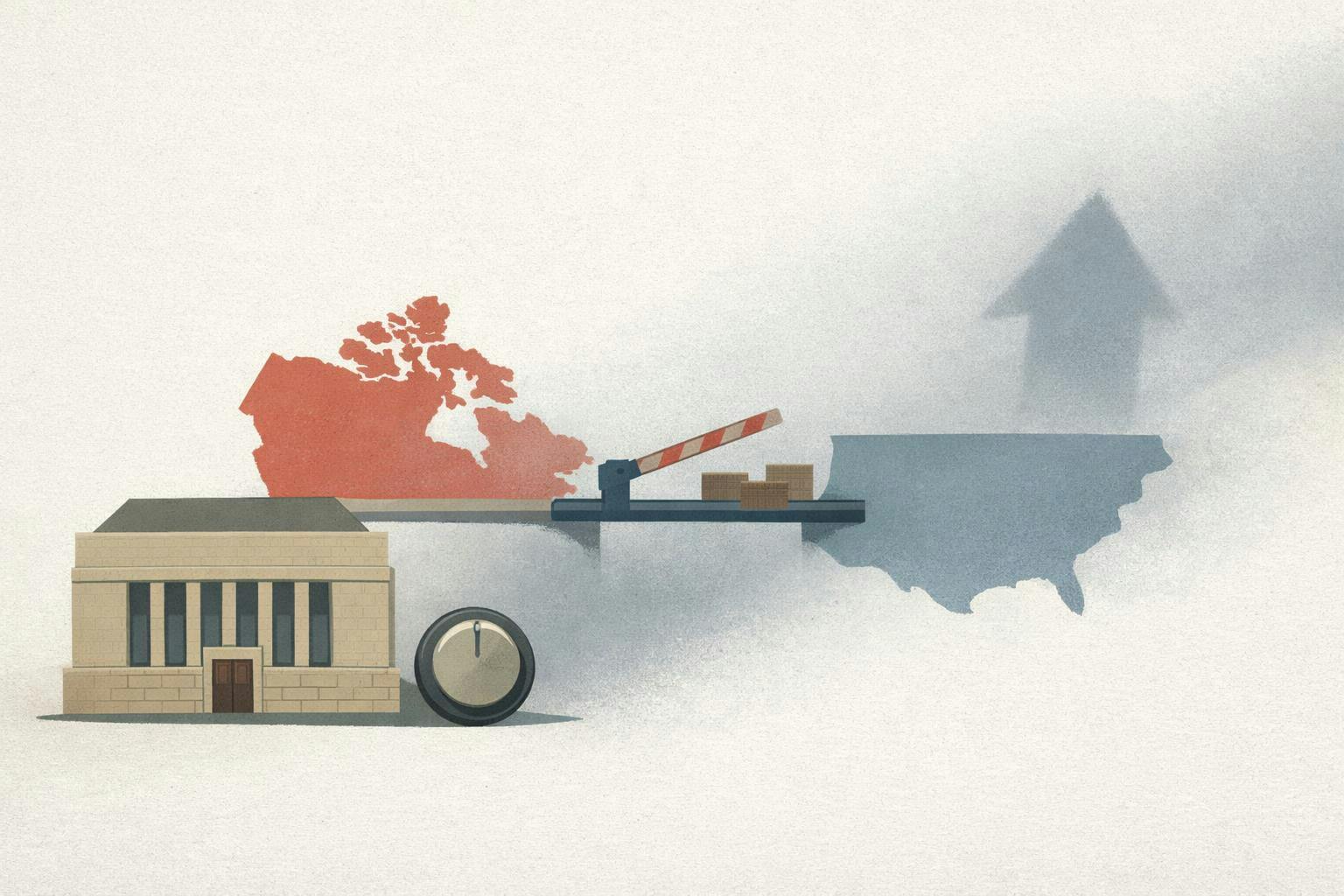
Several "unknown unknowns" are driving this potential shift in the Monetary Policy Report. The most significant is the scheduled USMCA trade negotiations. Trade volatility often leads to currency fluctuations; if the Canadian dollar weakens significantly against the USD, the Bank of Canada may be forced to raise rates to protect the loonie and curb imported inflation. Furthermore, core inflation projections remain a concern. While top-line inflation might hit the 2% target, the underlying costs of services and housing often prove stickier, providing a justification for a BoC rate forecast for 2026 mortgage renewals that includes at least two quarter-point hikes.
RBC interest rate hike warning 2026 practical advice suggests that the "waiting game" for 1% or 2% mortgage rates is officially over. We are entering a cycle characterized by interest rate sensitivity, where even minor global supply chain disruptions or shifts in oil prices can trigger a hawkish response from Tiff Macklem and his team.
The Price of Renewal: Avoiding the 20% Payment Shock
We are approaching a historic moment in the Canadian real estate market. According to the Bank of Canada, approximately 60 per cent of mortgage holders renewing in 2026 will face higher monthly payments. This is not a marginal increase; five-year fixed-rate borrowers are expected to see average payment spikes of 15% to 20% compared to their original terms.
To put this into perspective, many homeowners currently carry rates as low as 1.79% or 2.15% from the 2021 market bottom. When these renew in 2026, the Canadian mortgage rate outlook 2026 suggests they will be looking at market rates between 4.5% and 4.9%. This transition represents a massive shift in household debt-to-income ratios.
Mortgage Shock Math
Imagine a homeowner with a $500,000 mortgage currently paying 1.99%. Their current monthly payment is roughly $2,115. Upon renewal at a predicted 2026 rate of 4.79%, that payment jumps to $2,848. That is a $733 monthly increase—or roughly $8,800 per year in after-tax income that must be diverted from savings or lifestyle spending.
This financial strain is exacerbated by the impact of GoC 5-year bond yields on fixed rates 2026. Because mortgage lenders use these bond yields to price their products, any upward pressure on government debt—often caused by deficit spending or global risk—flows directly to the consumer. For every 1% increase in interest rates, the average Canadian buyer loses roughly 10% of their purchasing power. This "Rule of 10" is a sobering reminder for those preparing for 20 percent mortgage payment increases 2026.
BMO Capital Markets identifies June 2026 as the projected absolute peak of this renewal cycle. With nearly 1.8 million mortgages coming due between late 2025 and 2026, the demand for refinancing and renewal advice will be at an all-time high, potentially leading to tighter lending criteria as banks manage their own risk exposure.
Strategic Choices: Fixed vs. Variable Mortgage Strategy 2026
Choosing the right product in 2026 requires a deep dive into your personal risk tolerance. The fixed vs variable mortgage strategy 2026 is no longer about which rate is lower today, but which rate will protect you from the Bank of Canada's next move.
Variable rates often track the prime lending rate directly. If you choose a variable path and the BoC raises rates in late 2026 to combat trade-driven inflation, your monthly payment or your mortgage amortization period will increase immediately. This highlights the risks of staying variable during 2026 BoC rate increases. Conversely, a fixed rate offers a psychological "armor" against economic volatility, even if the initial rate is slightly higher.
| Strategy | Recommended Term | Suitability | Risk Level |
|---|---|---|---|
| The Safety Net | 5-Year Fixed | Budget-conscious families seeking absolute payment certainty. | Low |
| The Middle Ground | 3-Year Fixed | Borrowers who believe rates will drop again by 2029. | Moderate |
| The Calculated Gamble | Variable Rate | High-income earners who can absorb a $500/month swing. | High |
| The Short Hedge | 2-Year Fixed | Those planning to sell or relocate before 2028. | Moderate |
While most banks lean toward a neutral stance, some outliers, such as Scotiabank, have maintained a more hawkish tone in their market pricing expectations. They suggest that if the USMCA review goes poorly, the Bank of Canada might need to be even more aggressive, potentially pushing fixed rates above the 5% mark. In this scenario, locking in early becomes the only logical defensive play.
The Homeowner’s Action Plan: Defensive Tactics
Preparing for the BoC rate forecast requires more than just checking your bank balance. It requires a proactive stance aimed at mitigating the upcoming payment shock. The timing for locking in mortgage rates before BoC hikes is the most critical factor in your strategy.
- The 120-Day Window: Most Canadian lenders allow you to hold a rate for 120 days prior to your renewal date. For those with a June 2026 renewal, your planning should begin in January 2026.
- Review the FCAC Mortgage Charter: The Financial Consumer Agency of Canada has implemented guidelines to help homeowners under stress. This includes allowing for mortgage amortization extensions or waiving certain fees if you are struggling with payment increases.
- Double-Up Payments Now: If you still have a year or two before your renewal, use your "low-rate years" to make extra principal payments. This reduces the total balance that will be subject to the higher 2026 rates.
- Stress Test Your Own Budget: Don't wait for the bank to tell you what your new payment is. Use an online calculator to simulate a 3% rate hike today. If your budget breaks, you need to start adjusting your household debt-to-income strategy now.
By taking these steps, you move from a position of vulnerability to one of control. The Canadian mortgage rate outlook 2026 is undoubtedly more challenging than the "free money" era of 2021, but it is manageable with a clear instructional plan.
FAQ
What is the long-term outlook for Canadian interest rates?
The long-term outlook suggests that the era of near-zero interest rates is over. Economists expect the Bank of Canada to settle into a neutral range between 2.25% and 3.25% over the next several years. This means mortgage rates in the 4% to 5% range will likely become the "new normal" for the foreseeable future, rather than the historical anomalies we saw during the pandemic.
How do Bank of Canada rate changes affect mortgage rates?
Bank of Canada rate changes directly influence the prime lending rate, which determines the cost of variable-rate mortgages. When the central bank raises its policy rate, variable payments or amortizations typically rise immediately. Fixed-rate mortgages are influenced more by the 5-year Government of Canada bond yields, which reflect investor expectations of where the BoC will set rates in the future.
What factors are influence the Bank of Canada interest rate forecast?
The BoC interest rate forecast is primarily influenced by the 2% inflation target, employment data, and GDP growth. However, external factors like US trade policy (including the USMCA review), global energy prices, and the exchange rate of the Canadian dollar also play a significant role in determining whether the bank needs to hike rates to maintain economic stability.
What do economists predict for the terminal interest rate in Canada?
Most economists predict a terminal interest rate—the point where the rate hike cycle ends—of approximately 2.25% to 2.50% in the short term. However, persistent core inflation and trade-related supply shocks could push this terminal rate closer to 3.0% or 3.25% by late 2026, creating a tighter environment for borrowers renewing their terms.
Navigating the 2026 BoC rate forecast requires a balance of market awareness and personal financial discipline. While the headlines regarding 20 percent payment increases are daunting, they are also a signal to act early. Review your documentation, talk to a professional, and ensure that when the late-2026 shift arrives, your household is ready to weather the change.